

The natural capital approach is now central to policies that impact planning and development, land management, farming, and biodiversity conservation/nature recovery. Due to this, there is a growing understanding that natural capital assets have value. There are many schemes that take a ‘payments for ecosystem services’ approach such as Woodland Carbon Code, Woodland Carbon Guarantee, England Woodland Creation Offer, Carbon Banking, as well as Environmental Land Management (ELM) schemes. The need for nature recovery and off-setting biodiversity units from a development site to achieve biodiversity net gain, and for local authorities and business to have a framework for delivering habitat banking, is also driving this change.
We advise clients on interventions that will deliver return on public financing schemes, and how to set up private and blended finance schemes.
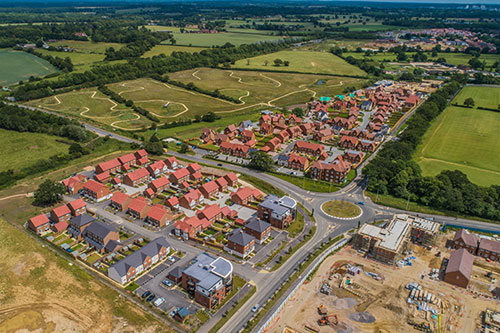
There is a mandatory requirement for Biodiversity Net Gain (BNG) for all new developments, as set out in the Environment Act 2021. In the future, environmental/natural capital net gain may become mandatory. We use natural capital mapping and accounting to compare the baseline and masterplan scenarios of developments. This allows us to see if net gain in biodiversity and ecosystem service benefits will be achieved.
Our approach is used by strategic planners at a landscape scale to identify suitable locations for site allocations or for enhancing Green Infrastructure (GI). We also advise local authorities on how to embed natural capital approaches into their planning and growth strategies. This includes incorporating the approach into Supplementary Planning Documents, GI strategies, access to natural greenspaces and Accessible Natural Green Space Standards (ANGSt), assessing biodiversity net gain, and off-setting and linking to Local Nature Recovery Networks.

Environmental Land Management schemes will encourage a move towards sustainable farming, by paying farmers and land managers public money for the delivery of public goods. We help farmers and estate managers make informed land management decisions that will increase biodiversity, the provision of ecosystem services, and financial benefits.

The passing of the Environment Act means that Biodiversity Net Gain for development will become mandatory. It will also make the development of a Local Nature Recovery Strategy a statutory requirement. We use a range of tools to help clients identify areas for restoration or nature recovery. We also advise on habitat that can be created to enhance biodiversity, such as planting woodland to meet tree planning and net zero carbon targets.

Net gain includes both biodiversity and ecosystem services net gain (also known as natural capital or environmental net gain). We assist clients with assessing net gain and understanding whether planned interventions will indeed increase biodiversity and benefits. This is also central to assessing business cases for natural capital finance, the ELM schemes, and other payments for ecosystem services.

Natural capital enhancement and management can play an important role in the reduction of carbon emissions – helping to address climate change. We use a range of approaches to assess the carbon balance across woodlands, peatlands, and urban street trees. This helps clients to mitigate and build resilience to climate change and to create strategies for using the natural environment to reduce emissions and identify potential natural capital investments for lowering emissions.